 By Jay Phillips · October 26, 2026
The vocabulary
Economics keeps coming back to one simple idea: we don’t get ahead mostly by working harder. We get ahead through productivity, getting more output from the same labor, fuel and capital. When a new technology raises productivity, the whole production possibilities frontier moves outward. Same people, same water, more trips.
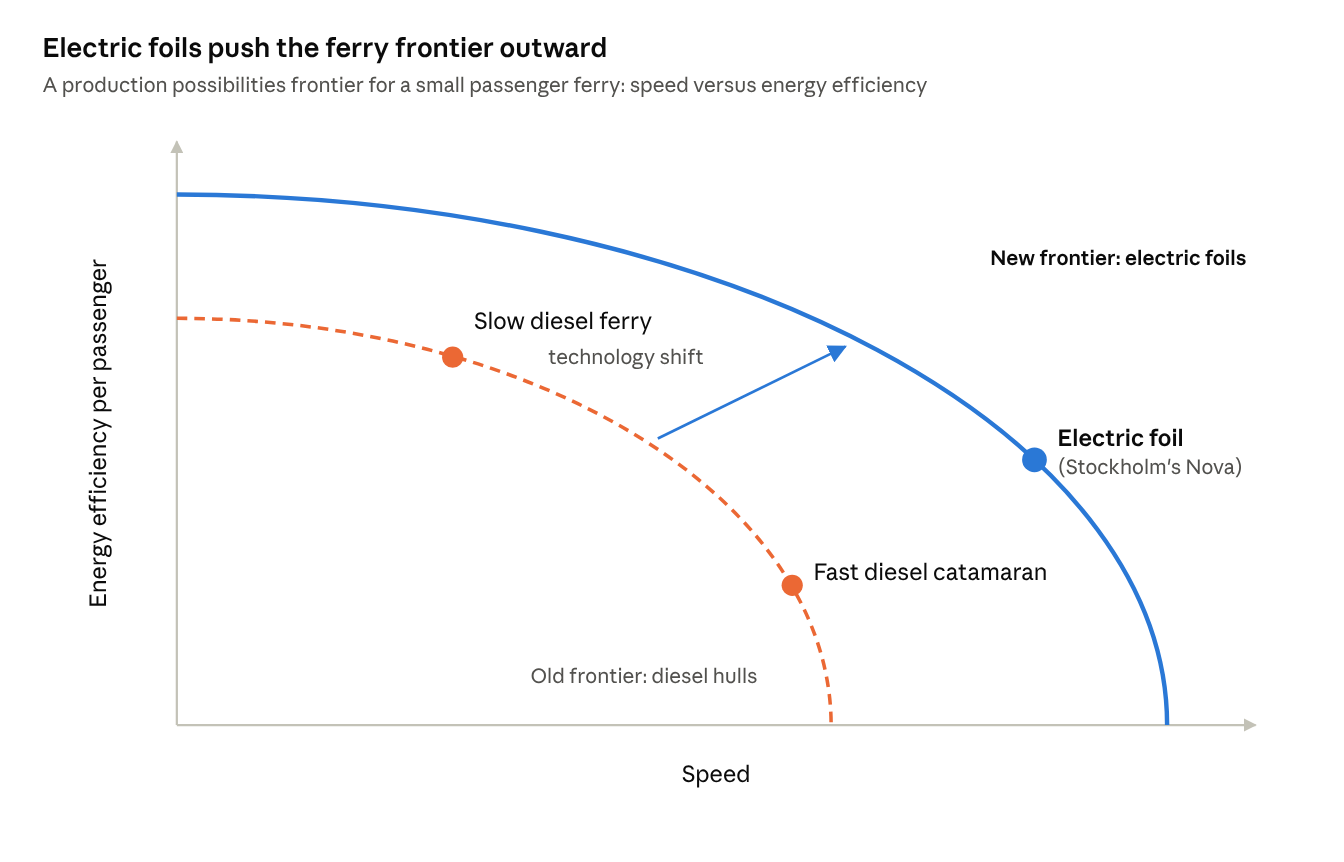
On the old frontier, a ferry operator could have speed or fuel economy, not both. New technology moves the whole curve out, so the same boat can be faster and more efficient at once.
A few more terms help explain why that matters for a ferry.
- Fixed cost is what you pay whether the boat runs or not: the hull, the dock, insurance, the loan.
- Marginal cost is what one more trip costs: fuel, wear, the crew’s hour.
- Average total cost is everything divided by the number of trips. Run more trips and the fixed cost gets spread thinner.
- Economies of scale means bigger volume brings the cost per unit down.
- The learning curve says costs fall a predictable amount each time an industry doubles how much it has built.
- An externality is a cost someone else pays, like exhaust in the air or noise across a quiet harbor.
History is full of moments when one technology moved all of these at once. Here are four from living memory, and what they tell us about the boats coming to the Pamlico Sound.
1956: A truck driver from Maxton and the box
The best example starts in North Carolina. Malcom McLean was born in Maxton in 1913 and started out hauling empty tobacco barrels out of Red Springs. By 1952 he was working on a plan to carry his trucks by ship from North Carolina to New York.
In those days cargo went aboard one sack and crate at a time, by hand. McLean’s answer was a standard metal box that came off a truck and went straight onto a ship. On April 26, 1956, a converted World War II tanker, the Ideal-X, left Newark for Houston with 58 of them on deck.
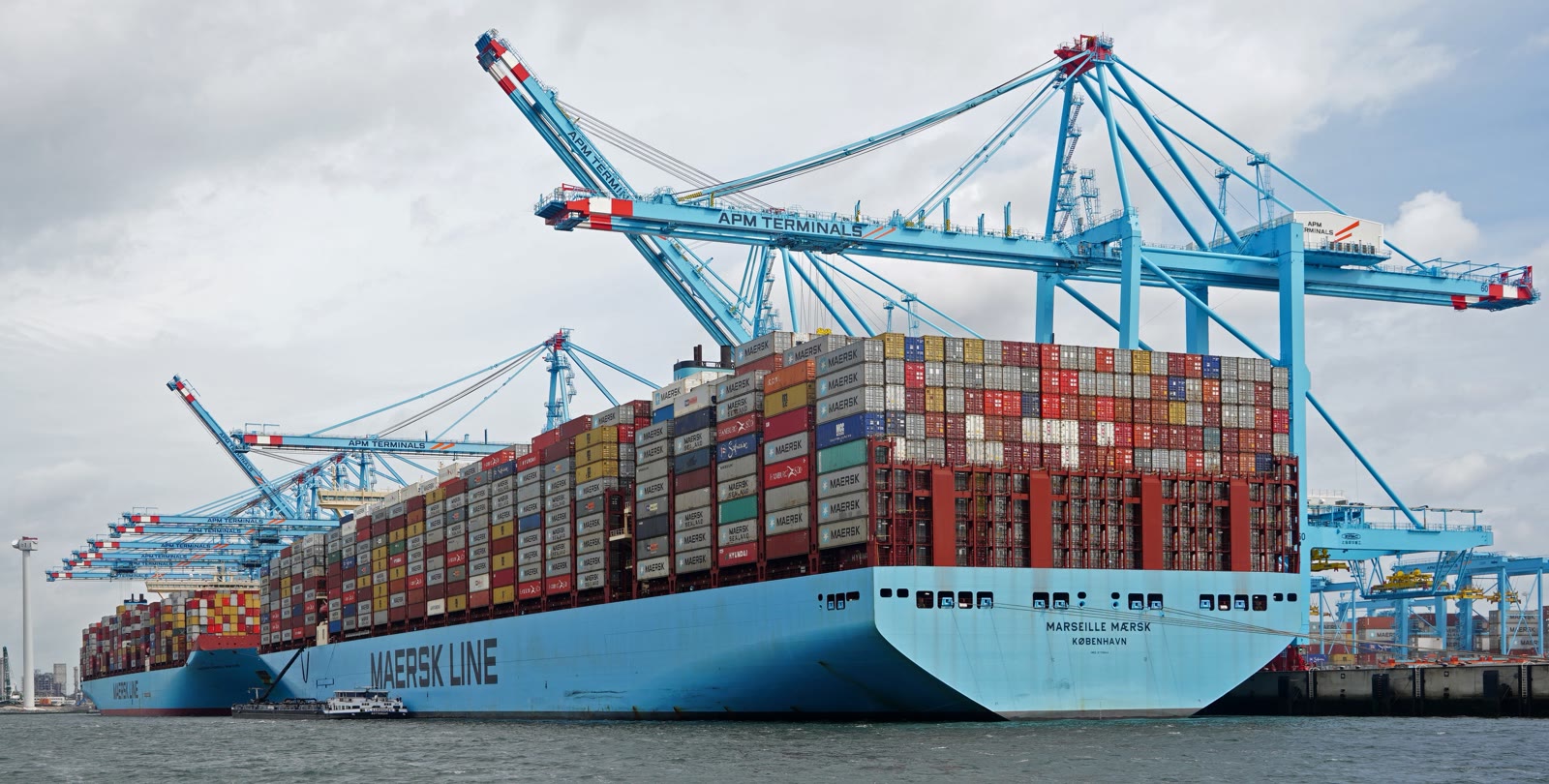
The economics were staggering. Hand-loading cost about $5.86 a ton. Loading by container cost about 16 cents, a 36-fold drop in marginal cost. McLean understood that a ship only earns money while it’s moving. Faster turnarounds meant more voyages per year from the same hull, so the fixed cost of the ship was spread across far more cargo.
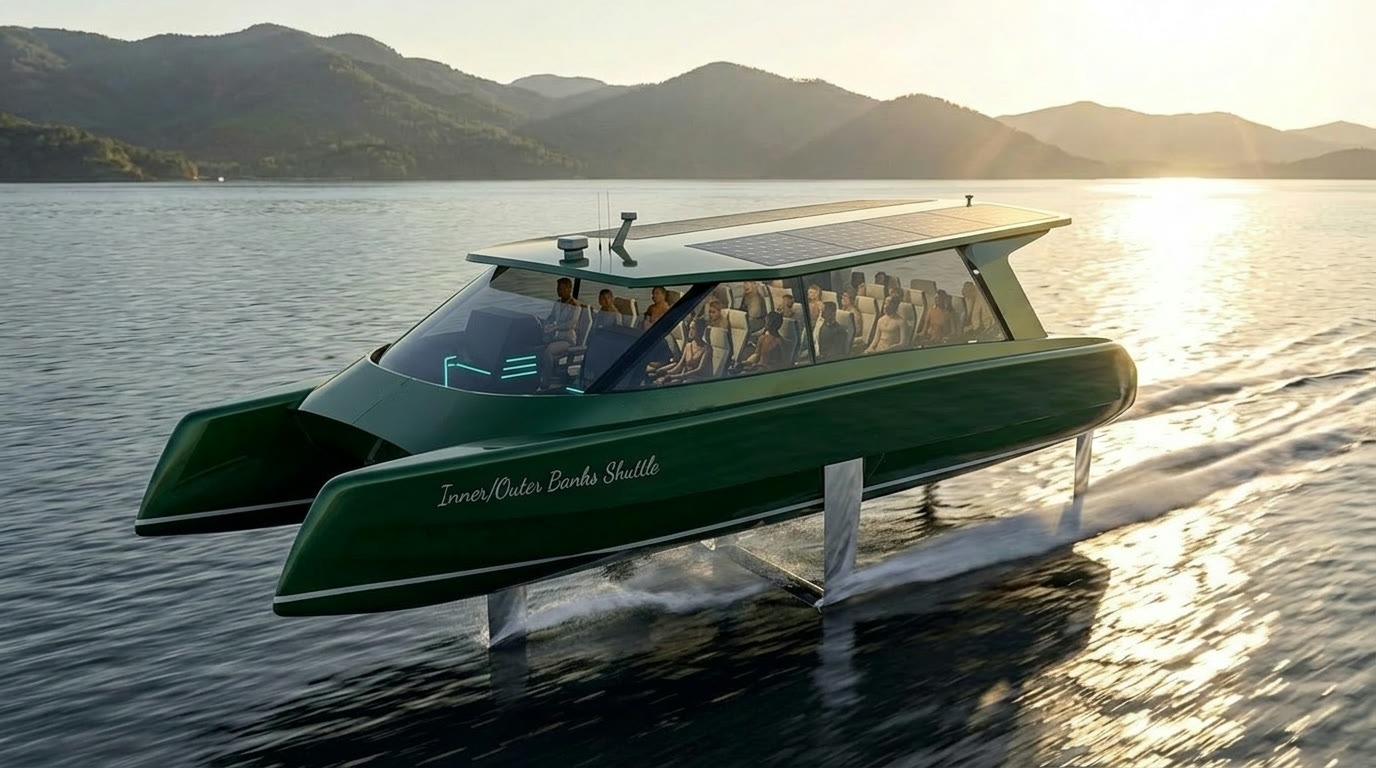
There’s a second lesson in it, and it’s the one I think about most. Containers didn’t take off right away. Many ports had no cranes to lift them, and the industry was slow to change. The box only paid off once the docks, cranes and trucks around it were built to match. That’s why PamliEcoConnect plans to build not only the boats but also the charging stations, docks, maintenance and operations behind them, starting right here on the Pamlico Sound where we live.
1970: The jumbo jet, and the planes that replaced it
When the Boeing 747 entered service in 1970, it nearly doubled the seats of the 189-seat 707. New high-bypass engines put out more than twice the thrust, and the first 747s burned about a third less fuel per seat than the 707 model they replaced. That’s economies of scale and better technology arriving in one airframe.
The payoff showed up in ticket prices. In 1970 a round trip from Australia to London cost an average Australian about 24 weeks of wages. Today it’s less than one week. A study for the Transportation Research Board found most of the early drop in cost per seat-mile came from size, and the rest from technology.
But the 747’s story has a twist. As engines kept improving, smaller twin-engine jets like the 777 and 787 took over its routes. They burned far less fuel per passenger, and they were much easier to fill. A big plane that flies half-empty has a terrible average cost per passenger. Airlines learned that load factor, the share of seats actually sold, matters as much as how many seats you have.
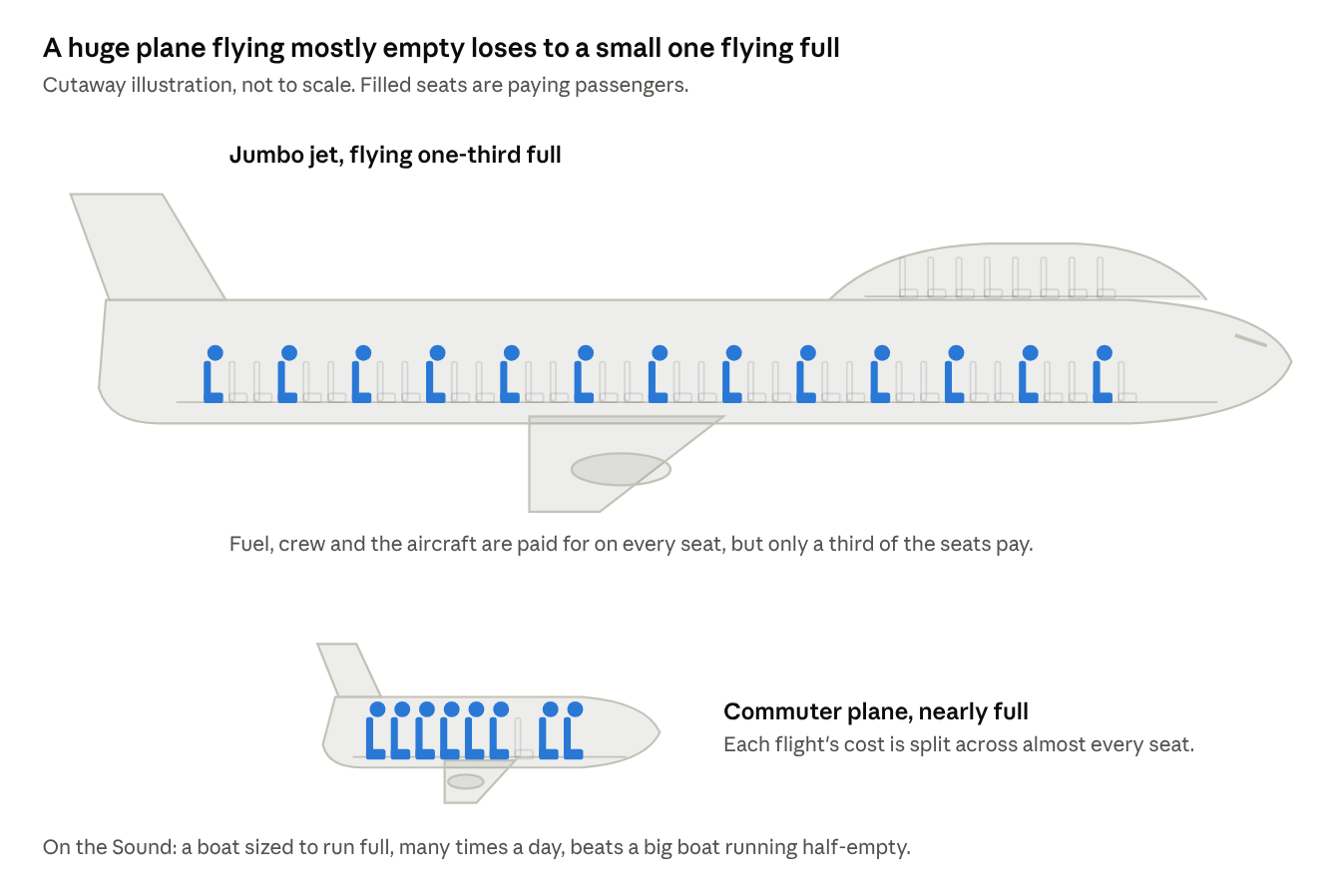
That lesson fits the Sound exactly. A boat sized to run full, many times a day, beats a big boat that runs twice a day half-empty.
2008 to today: The light bulb and the solar panel
Some technology shifts save money and clean the air at the same time. These are the ones economists get most excited about, because they shrink a negative externality without asking anyone to sacrifice.
Take the light bulb. In 2008 LED bulbs were pricey novelties. By 2016 the Department of Energy reported the cost of a standard LED bulb had fallen 94 percent. A DOE design prize pushed bulbs to 90 lumens per watt, against about 15 for the old incandescent. That’s roughly six times the light from the same electricity. Nobody had to be talked into it. The cheaper, cleaner bulb simply won.
Solar panels followed the same path. Between 2010 and 2023 the average cost of electricity from large solar farms dropped about 90 percent, according to the International Renewable Energy Agency. Panel prices follow a learning curve: each time the world’s total production doubles, the price falls by roughly 20 percent. Factories get better at it, suppliers scale up, and the cost keeps sliding.
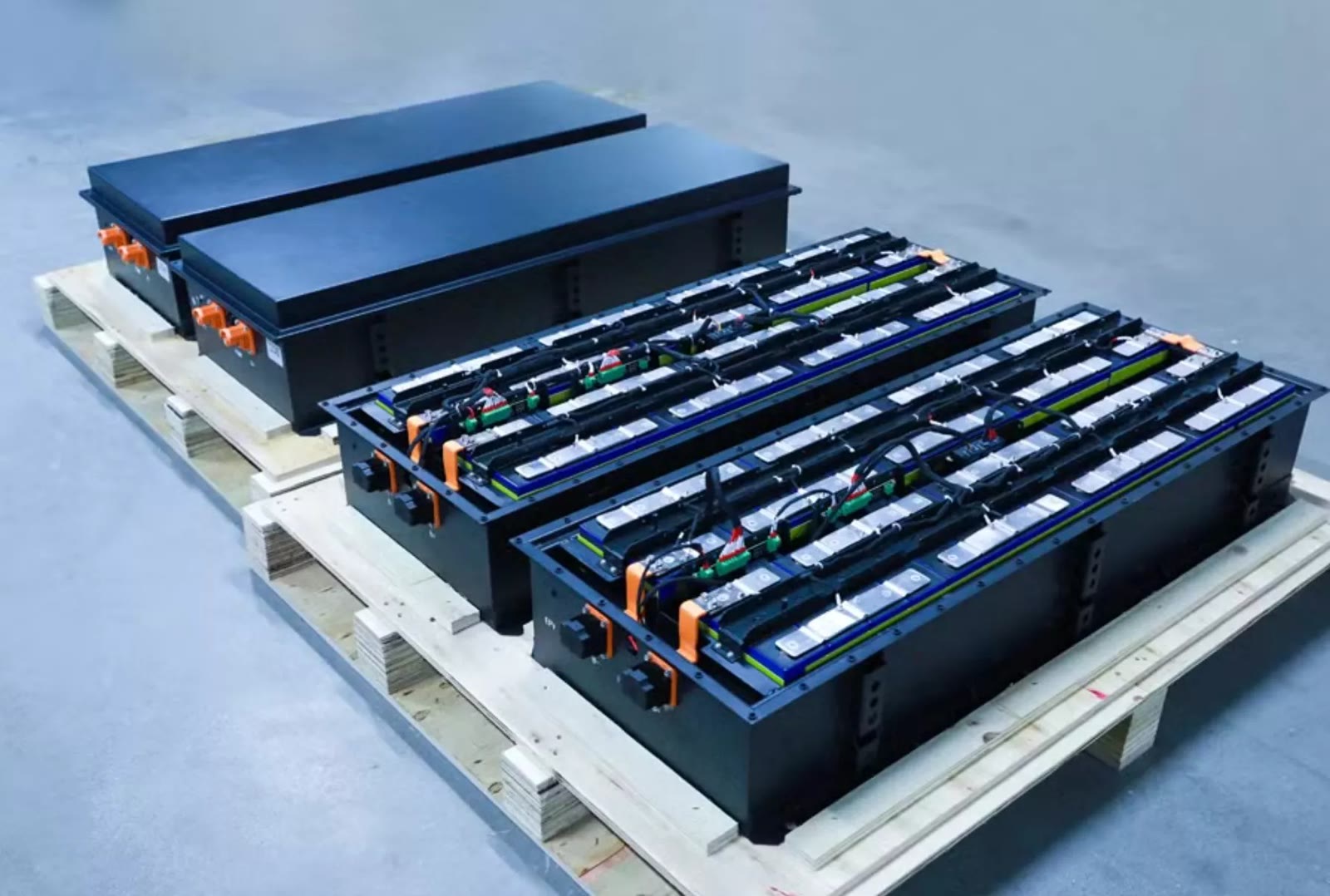
The lithium-ion battery is riding that same curve, and it’s the main reason an electric passenger boat is even on the table today. One honest note: the curve isn’t a straight line. Solar prices actually jumped between 2021 and 2023 on supply-chain problems before falling again. The long trend is reliable. Any single year isn’t.
The battery itself also keeps improving, pushed along by the auto industry. LFP (lithium iron phosphate) batteries are much less prone to catching fire, which matters a great deal on a boat, and they’re now common. Sodium-ion batteries use cheaper, more plentiful materials and are starting to reach the market. Further out, chemistries like aluminum-ion are still in development. More competing technologies means more pressure on price.
2024: The ferry’s old trade-off finally breaks
For most of my career, passenger ferries lived with one hard trade-off: speed or fuel, pick one. Aluminum fast catamarans brought 25 to 35 knots, and speed wins riders. But it costs dearly. One maritime industry guide notes that a slow ferry the same length as a 130-foot fast cat can carry about twice the passengers on only a fraction of the fuel.
In economics terms, that’s opportunity cost. Every knot you add, you give up fuel money you could have spent running more trips. Operators were stuck choosing a point on the frontier. Nobody could move the frontier itself.
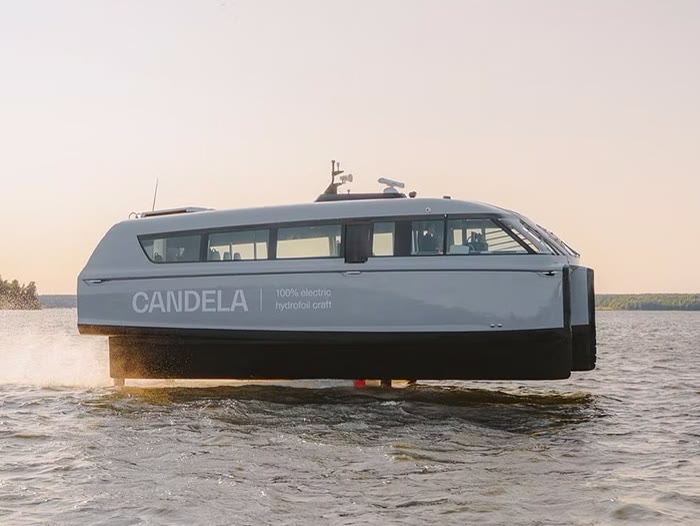
That changed in Stockholm. In fall 2024, a Candela P-12 electric hydrofoil named Nova joined the city’s public transit. Region Stockholm’s numbers from that first season:
| Measure | Nova (electric foil) | Diesel ferries, same route |
|---|---|---|
| Energy per passenger-km | 0.39 kWh | 3.31 kWh |
| CO₂ per passenger-km | 23 g | 439 g |
| Commute time | about 30 min | 45 to 55 min |
Source: Candela / Region Stockholm
That’s faster and about one-eighth the energy per rider. The trade-off didn’t get a little better. It went away. Riders noticed: seats ran about 81 percent full, the route’s ridership rose 30 percent, and the region moved Nova from five days a week to daily service.
What it means on the Pamlico Sound
Put those lessons together and the case for an electric foiling passenger boat comes down to the shape of its costs.
Fixed cost goes up a bit. Marginal cost falls a lot. A foiling electric boat costs more to build than a plain aluminum skiff. But each extra trip costs little: electricity costing a fraction of the 40 or so gallons of diesel an hour a conventional small fast ferry can burn. When the next trip is cheap, the smart move is to keep running. That’s how you get frequent service instead of two boats a day.
More trips spread the fixed cost. This is McLean’s lesson. A hull earns money only when it’s moving. Every added crossing lowers the average total cost per passenger, which is what makes a fare people can afford.
Right-size the boat to keep it full. This is the 747’s lesson. A smaller boat running often at a high load factor beats a big one running half-empty. Stockholm’s Nova ran about 81 percent full.
The externalities shrink instead of grow. This is the LED lesson. No exhaust, far less noise, and a small wake once the hull is up on its foils. That matters along marsh shorelines that are already eroding.
And the system has to come with the boat. That’s the container’s lesson. Charging at the dock, a place to haul out, and people trained to maintain the vessel aren’t extras. They’re part of the product. So is testing: the boat design has to be proven on our own water before the fleet is built.
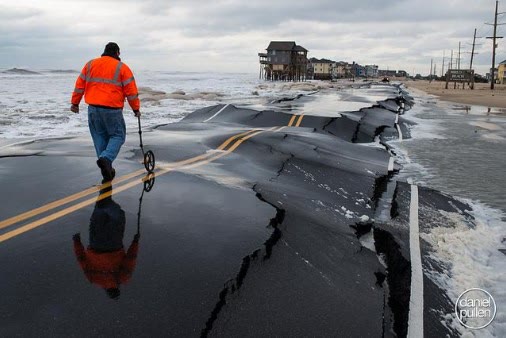
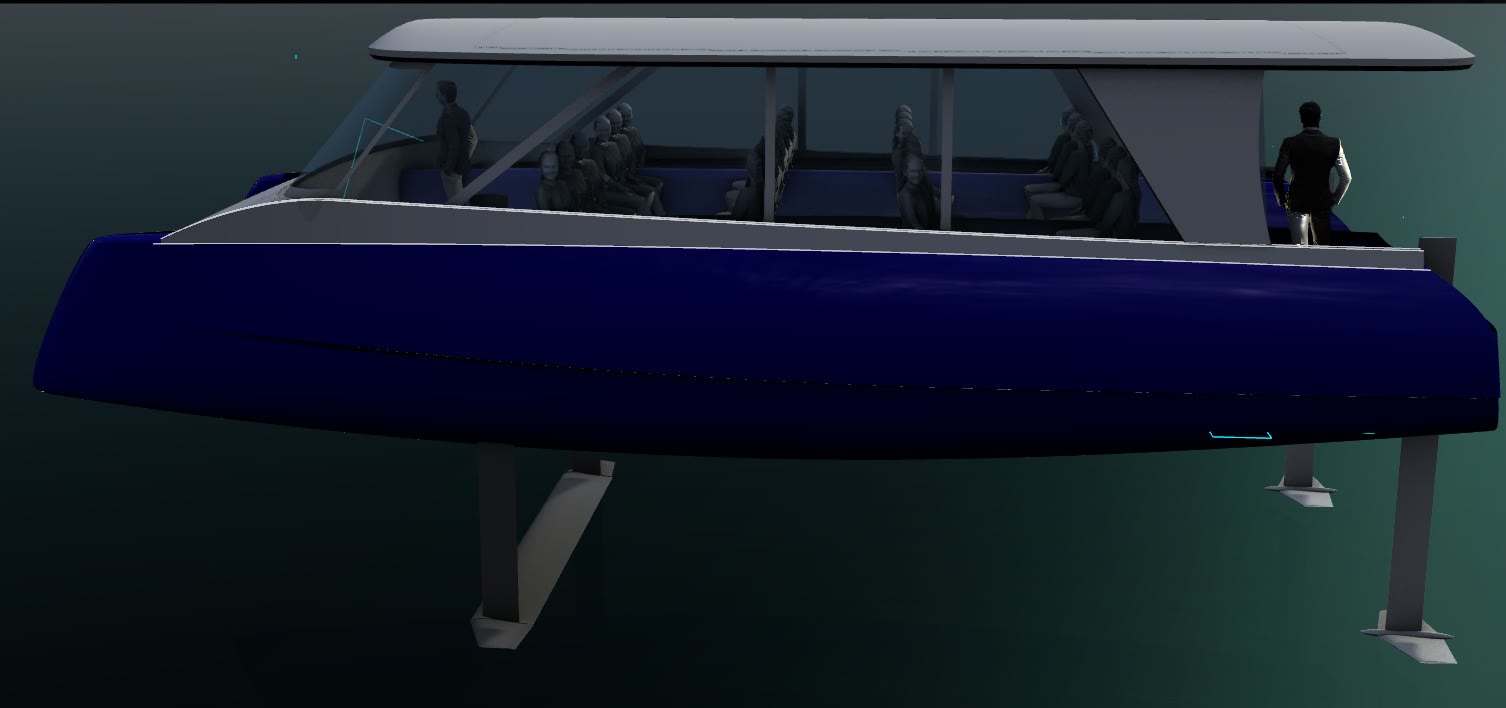
None of this replaces NC-12 or the state ferry system. It adds capacity alongside them, so when the road washes out or a ferry route shoals in, the region has another way across. Even when the road is open, fast boats open up options the road can’t. Workers who can’t find housing on the islands could live across the Sound and commute. Beach lovers from central and western North Carolina could skip much of a long drive. And locals could move quickly between towns on both sides of the Pamlico Sound.
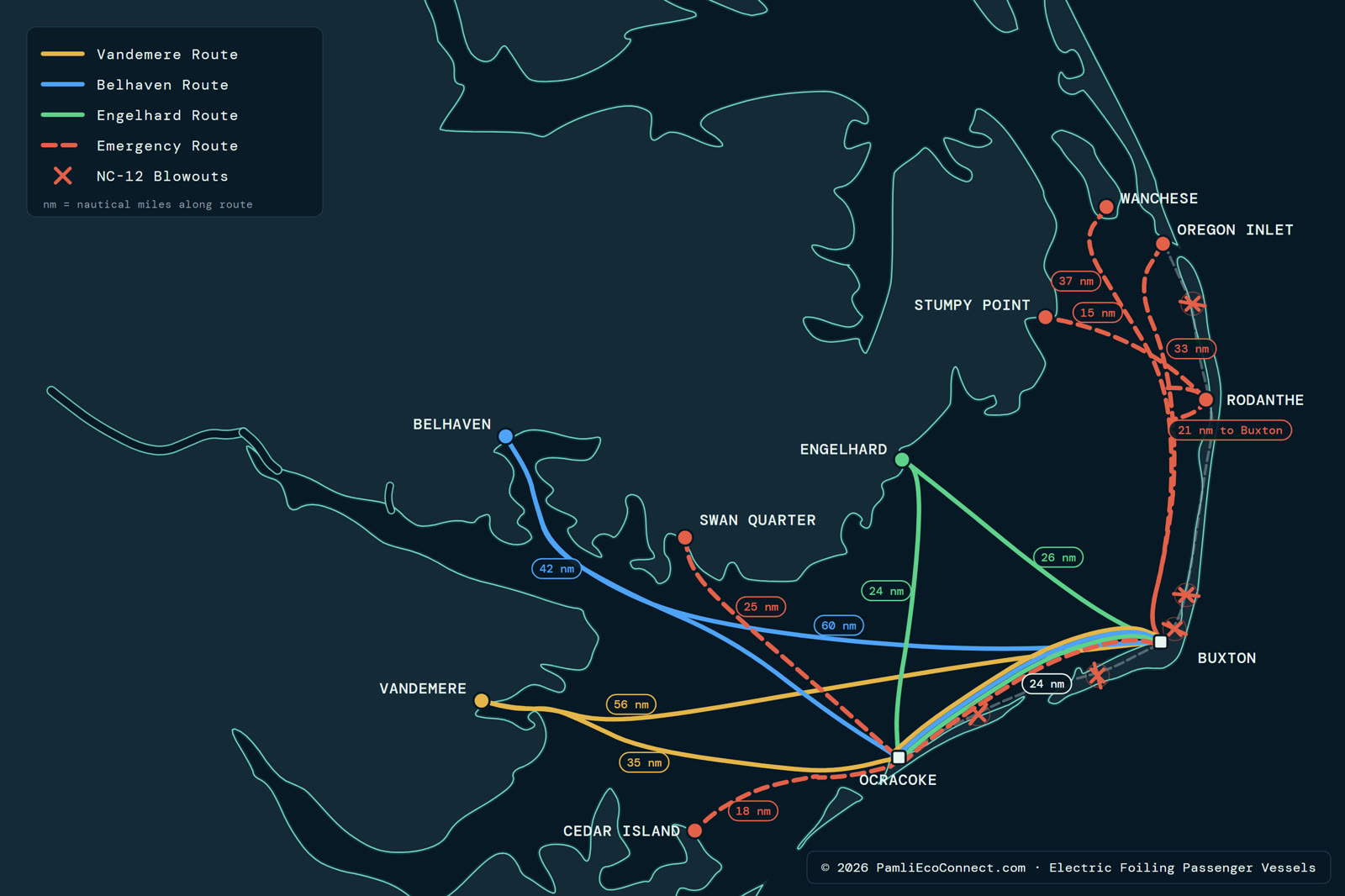
Here’s a simple family example. My kids go to school in New Bern but spend summers and vacations with me in Avon, working on our charter boats and as sailing instructors. Their friends are in New Bern. With a fast boat across the Sound, they could visit for the day and be home that evening, and suddenly see each other a lot more. Something like that can decide where a kid wants to spend the summer. Economists would call it value that never shows up in the fare box: time given back to people.
What the economics doesn’t promise
Any honest economist would add the fine print, so here it is.
- The first boats are the expensive ones. Learning curves reward volume. The first U.S.-built electric foiling vessels will sit at the costly start of that curve, not the cheap end.
- Being right about the technology isn’t enough. McLean himself, years after the container, bet a fleet on high oil prices that never came, and that company went bankrupt in 1986. Timing and financing matter as much as the idea.
- Demand isn’t Stockholm’s. Our traffic swells in summer and thins in winter. Low cost per trip helps, but a boat still has to find riders in February.
- Batteries wear out. A battery pack is a cost that comes due on a schedule, and it has to be in the plan from day one.
None of that argues against the boats. It argues for building them carefully, with the support system in place, sized to the real demand.
Founder, PamliEcoConnect · 252-489-8193
Sources
- Malcom McLean (Wikipedia): Maxton origin, Ideal-X, $5.86 vs 16 cents per ton, port cranes, 1986 bankruptcy
- How the Boeing 747 slashed airfares (AirlineRatings): seats, thrust, fuel, Australia–London fares, 777/787 efficiency
- Transportation Research Board circular on seat-mile costs: size vs technology split
- DOE: Revolution…Now lighting interview: 94% LED cost drop, 90 vs 15 lumens per watt
- Business Renewables Centre-Canada on solar costs: 90% LCOE drop 2010–2023 (IRENA), ~20% learning rate, 2021–23 price spike
- Maritime Law Center, Ferry Operations: fast vs slow ferry capacity and fuel
- Candela newsroom, Stockholm Nova results: energy, CO₂, travel time, occupancy, ridership